Last updated: August 17, 2026
Published August 17, 2026 · Updated August 17, 2026
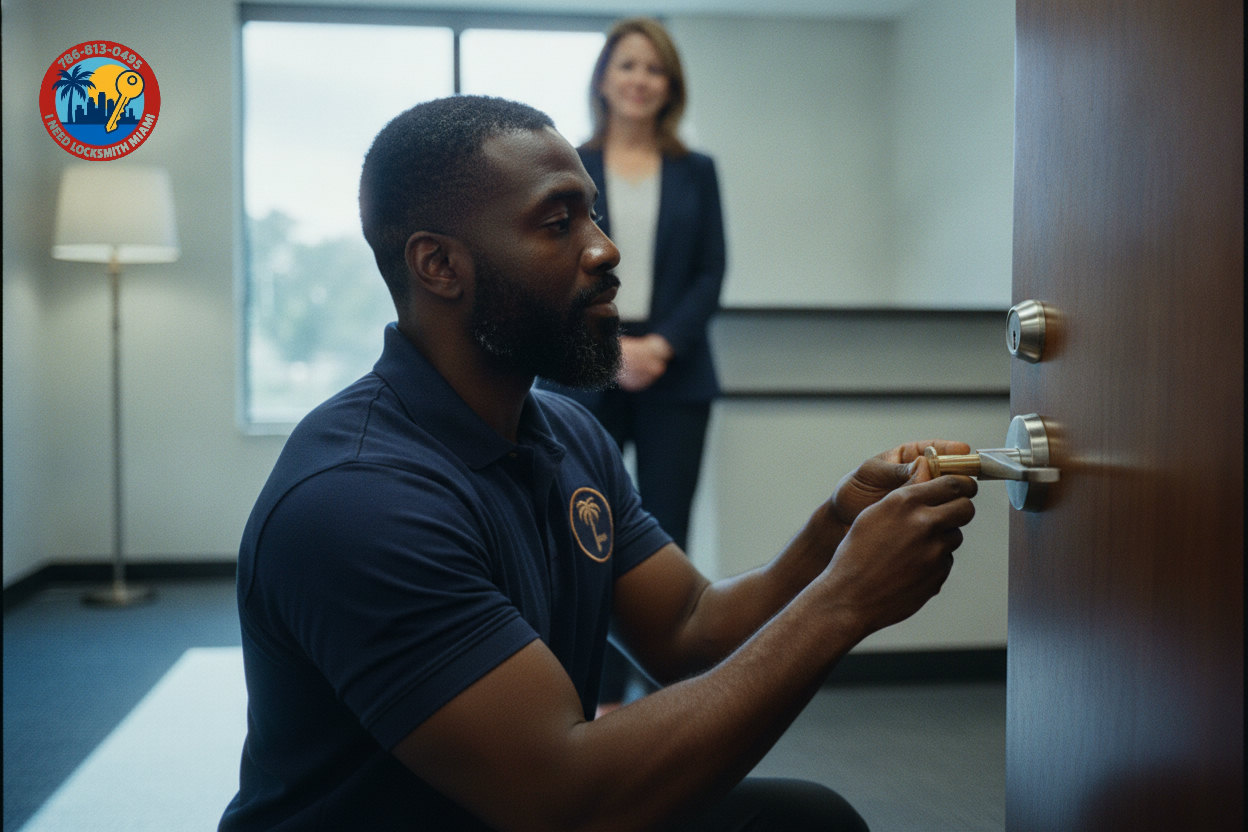
How to give contractors temporary access without changing lock code settings in Bal Harbour, Miami comes down to one thing: your lock needs to hold multiple independent user codes, and each contractor gets their own numbered slot with an expiration date. A Schlage Encode-class keypad supports up to 100 separate access codes; Yale’s Assure Lock 2 line supports up to 250. Delete slot 14 when the HVAC job ends and your staff code – slot 1 – never changes.
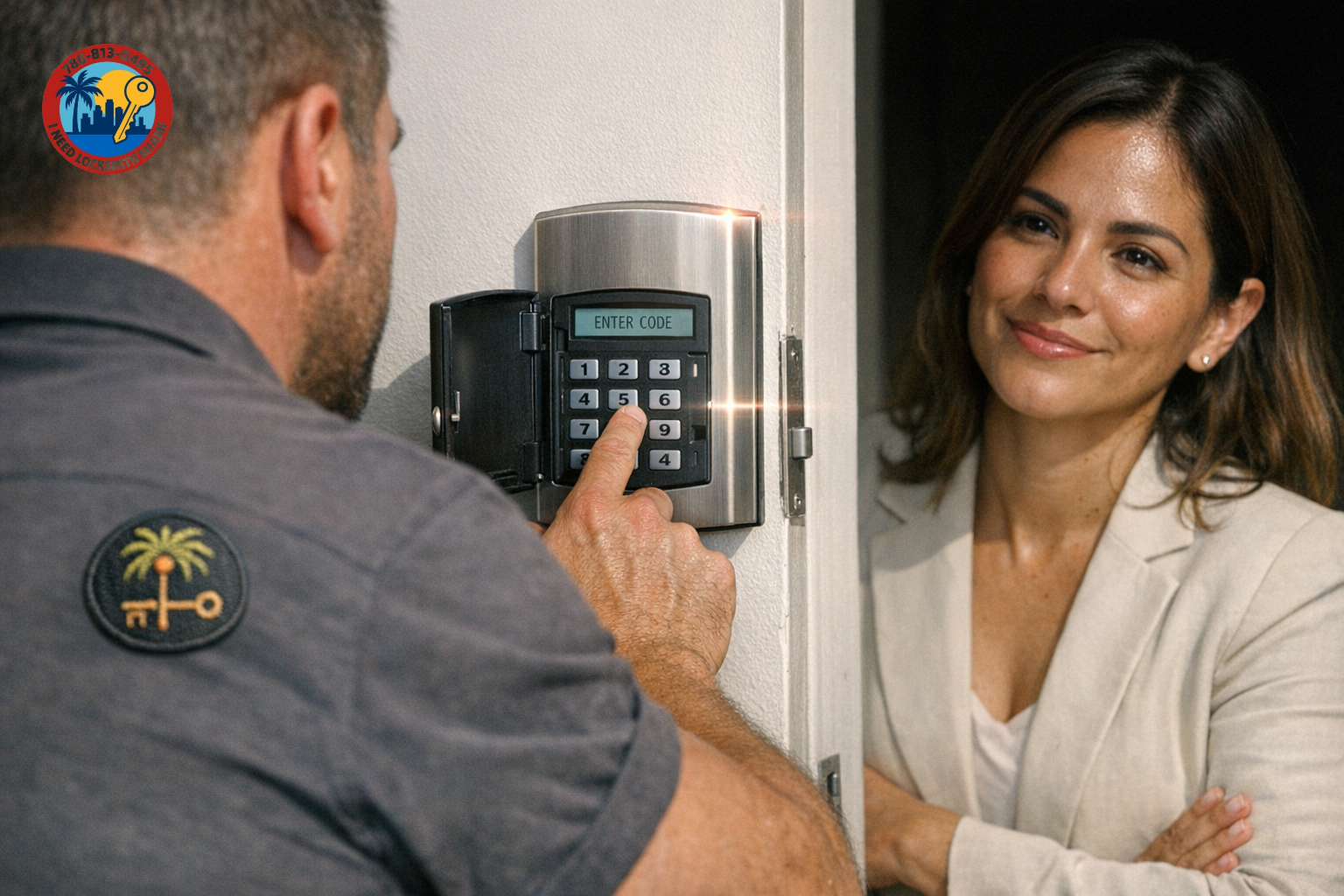
- One shared code for staff and vendors is the actual problem. Multi-user keypads solve it without touching your main code.
- Commercial access control keypad installation runs $250 – $400; smart lock installation (August/Level-class) runs $280 – $380.
- Assuming a smart lock drops into your existing deadbolt prep is the most expensive assumption we see – new drilling and hardware adaptation adds $80 – $150 in labor.
- Verify the contractor is registered and permitted with the Village of Bal Harbour before you issue a code, not after.
- Every temporary code needs a written kill date. Not rekeying or revoking after turnover is a liability gap, not a housekeeping oversight.
The Short Answer
The answer to how to give contractors temporary access without changing lock code programming in Bal Harbour, Miami is that you never share the master or staff code in the first place. You assign each vendor a dedicated user slot on a multi-code keypad or cloud-managed reader, set a start and end date, and delete the slot the day the job closes out. Your staff code, your manager code, and your emergency override all stay exactly where they are.
If you’re a boutique manager on Collins Avenue or in the Bal Harbour Shops corridor juggling a display installer, an AC tech, and a nightly cleaning crew on three different schedules, that’s the whole game: separate credentials, separate expiration dates, one audit log. This is not for a single-family homeowner letting a plumber in once a year – this is for a commercial tenant with rotating vendors and inventory worth more than the door.
The Full Answer
Your keypad probably already holds more codes than you’re using
Most Bal Harbour retail keypads we open up are running one code out of a lock built for dozens. A Schlage BE365 mechanical-electronic deadbolt holds up to 19 user codes. Schlage’s Encode Wi-Fi line supports up to 100. Yale’s Assure Lock 2 family supports up to 250 entry codes. Kwikset SmartCode keypads typically hold 16 to 30, depending on model.
So before anyone quotes you a new system, the first move is to pull the lock’s model number off the interior escutcheon and check the code capacity. Honestly, that’s the step most people skip – and about as often as not, the fix is a programming session, not a purchase.
“The thing that surprises managers most is that we’re rarely selling them a lock. We’re deleting eleven dead codes nobody could account for and building an actual code map on paper. The hardware was already capable – the recordkeeping wasn’t.” – I Need Locksmith Miami Team
The three-tier code map every Bal Harbour boutique should be running
Temporary contractor access in a Bal Harbour retail space works when the code structure is decided before the vendor calls. Here’s the structure we set up most often on commercial keypads and card readers in Miami-Dade.
Tier 1 – Permanent (slots 1-4)
Owner, store manager, assistant manager, and the programming/master code. These never rotate for a vendor. They rotate on employee turnover only.
Tier 2 – Recurring service (slots 5-9)
Cleaning crew, window washer, alarm company tech. Individual codes per company, reviewed quarterly. If the cleaning contract changes hands, you delete one slot – not the whole lock.
Tier 3 – One-job codes (slots 10 and up)
HVAC, electrician, display installer, glass tech. Issued the morning work begins, revoked the afternoon it ends. On cloud-managed systems you set the expiration at creation and forget about it.
Write the map down and keep it off the sales floor
Slot number, who holds it, issue date, kill date. A one-page sheet in the manager’s binder or a shared spreadsheet with restricted access. Undocumented codes are the root of nearly every “we don’t know who has access” call we take.
If your lock only holds one code, here are your real upgrade paths and prices
Some Bal Harbour back doors are still running a single-combination mechanical pushbutton lock or a plain keyed deadbolt. In that case you can’t issue a temporary code – there’s nothing to issue it to. These are the options we actually install across Miami-Dade, with real pricing.
| Option | Price | Wins when… |
|---|---|---|
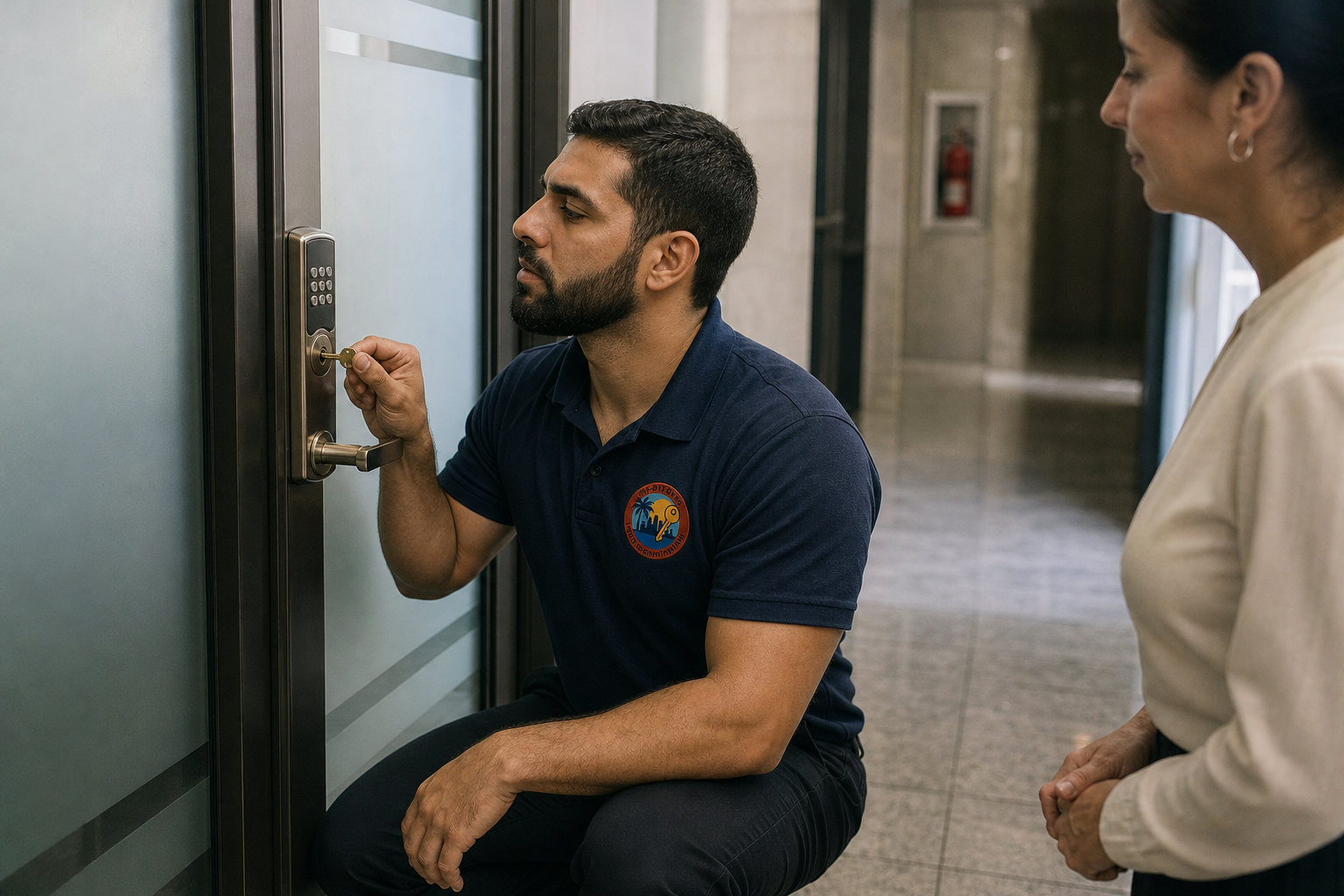
| Commercial access control keypad | $250 – $400 | You need many user slots on a back-of-house door and don’t want to depend on Wi-Fi coverage in a concrete stockroom. |
| Smart lock installation (August/Level-class) | $280 – $380 | You want app-issued codes with start/end times and a phone notification when the contractor actually walks in. |
| Deadbolt installation (Schlage/Yale) | $150 – $220 | The door needs a proper secondary lock first – a keypad on a sagging door with a shot strike plate solves nothing. |
| Master key system (per door) | $120 – $180 | Contractors need mechanical access to specific interior doors – stockroom yes, safe room no – with one restricted key. |
| Existing-lock reprogram + code audit | Service call | Your lock already holds 19-250 codes and you just need a clean map and staff training. |
One warning that costs Bal Harbour tenants money every season: not every smart lock drops into your existing deadbolt hole. Backset, bore diameter, and door thickness vary – especially on older commercial doors and aluminum storefront stiles. Retrofitting properly adds $80 – $150 in labor. Buying the wrong lock online first is how a $280 job becomes a $430 job with a spare box on the counter.
A commercial access control keypad installs for $250 – $400 and gives you per-vendor codes without touching staff credentials. App-managed smart locks run $280 – $380 and add time-windowed codes plus entry notifications. Check code capacity on your current lock before buying anything.
Vet the contractor before the code – Bal Harbour paperwork comes first
Temporary access in Bal Harbour isn’t only a lock question – it’s a permitting and registration question. The Village of Bal Harbour’s Building Department handles permits for tenant work, and contractors performing permitted work are expected to be properly licensed and registered before they start. Confirm the permit number and the contractor’s license status through the Village before you hand over a code. Small cosmetic tasks may fall under work that doesn’t require a permit, but that does not exempt anyone from your building’s own access rules.
Bal Harbour also has construction-hours provisions in its village code. Check the current ordinance and then set the contractor’s access window to match the permitted work hours. If work is only allowed during specific weekday hours, a code that stops working outside those hours enforces the ordinance for you. That’s the trick nobody in the generic “how do you handle contractors” threads mentions – the schedule in your lock should mirror the schedule in the code book.
And if your unit sits behind a guard house, gated service drive, or shared loading dock, the vendor also needs to be registered with the property’s gate or security desk – separate from your lock code. Think of it the way a military base handles a visitor pass: the badge is issued to a named person, it expires, and it’s tied to a documented sponsor. Two separate credentials, both with kill dates.
The doors contractors need that aren’t the front door
A boutique’s contractor access problem is almost never the frameless glass front entrance. It’s the service corridor door, the stockroom, the electrical closet, the roof hatch, and the rear door with an electric strike wired to a buzzer at the counter. Each one deserves a different answer.
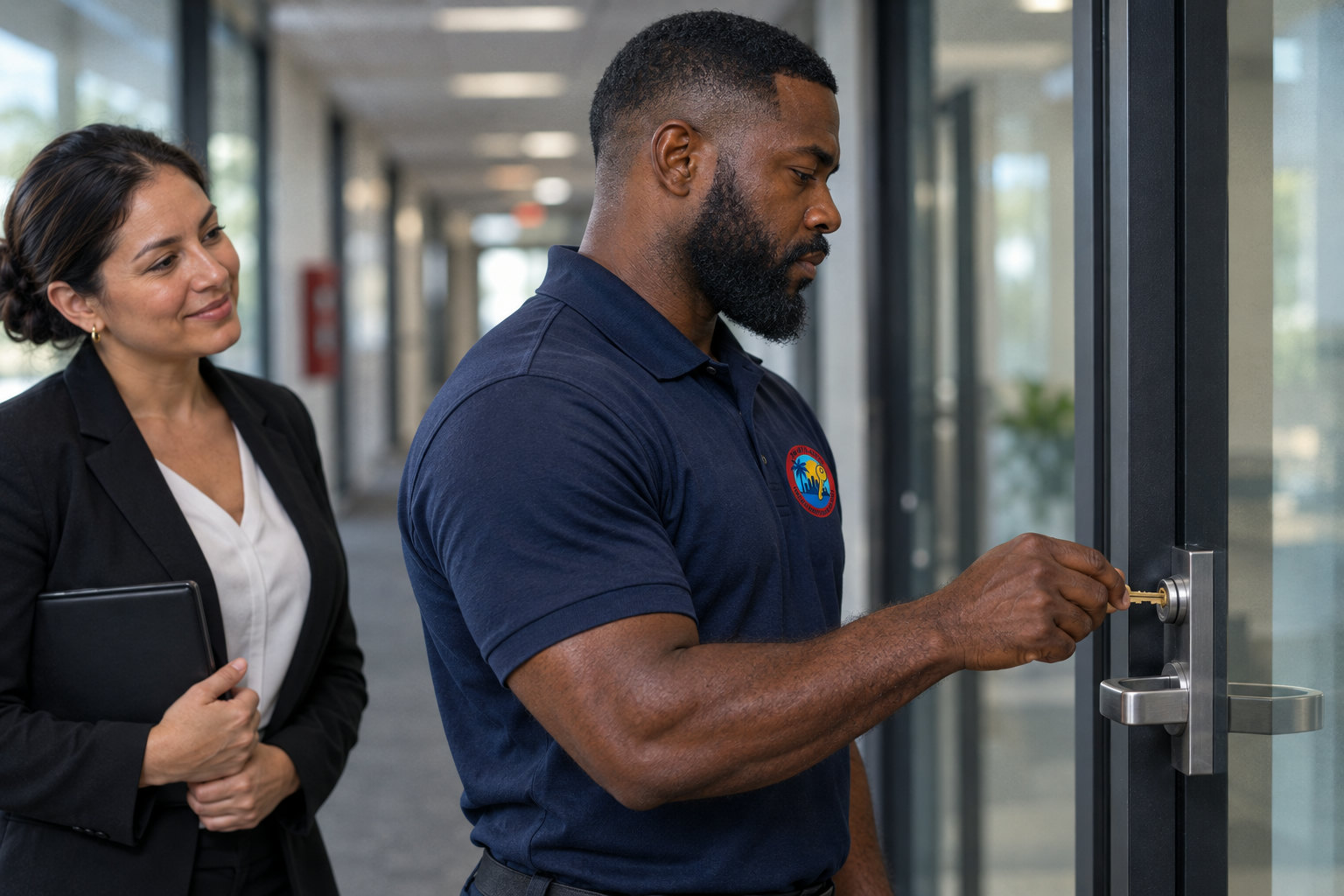
- Service corridor / rear door: keypad or card reader with per-vendor credentials. This is where the temporary code lives.
- Stockroom and high-value inventory: keep it mechanical and restricted – Medeco or Mul-T-Lock cylinders on a keyway that can’t be copied at a kiosk. Contractors generally don’t need this door at all.
- Electrical/IT closet: a separate keyed cylinder issued to the electrician for the duration of the job, then rekeyed. Not on the shared keypad.
- Rear door with electric strike or maglock: the release should be tied into your access control system, not a taped-down button. We’ve seen strikes propped with a folded receipt so a crew wouldn’t have to keep buzzing. That’s an unlocked store with a good story attached.
- Gate or loading-dock operator: LiftMaster-class operators can carry their own transmitter and code list – revoke that separately when the job wraps.
Audit trails: knowing who came in, not just that someone did
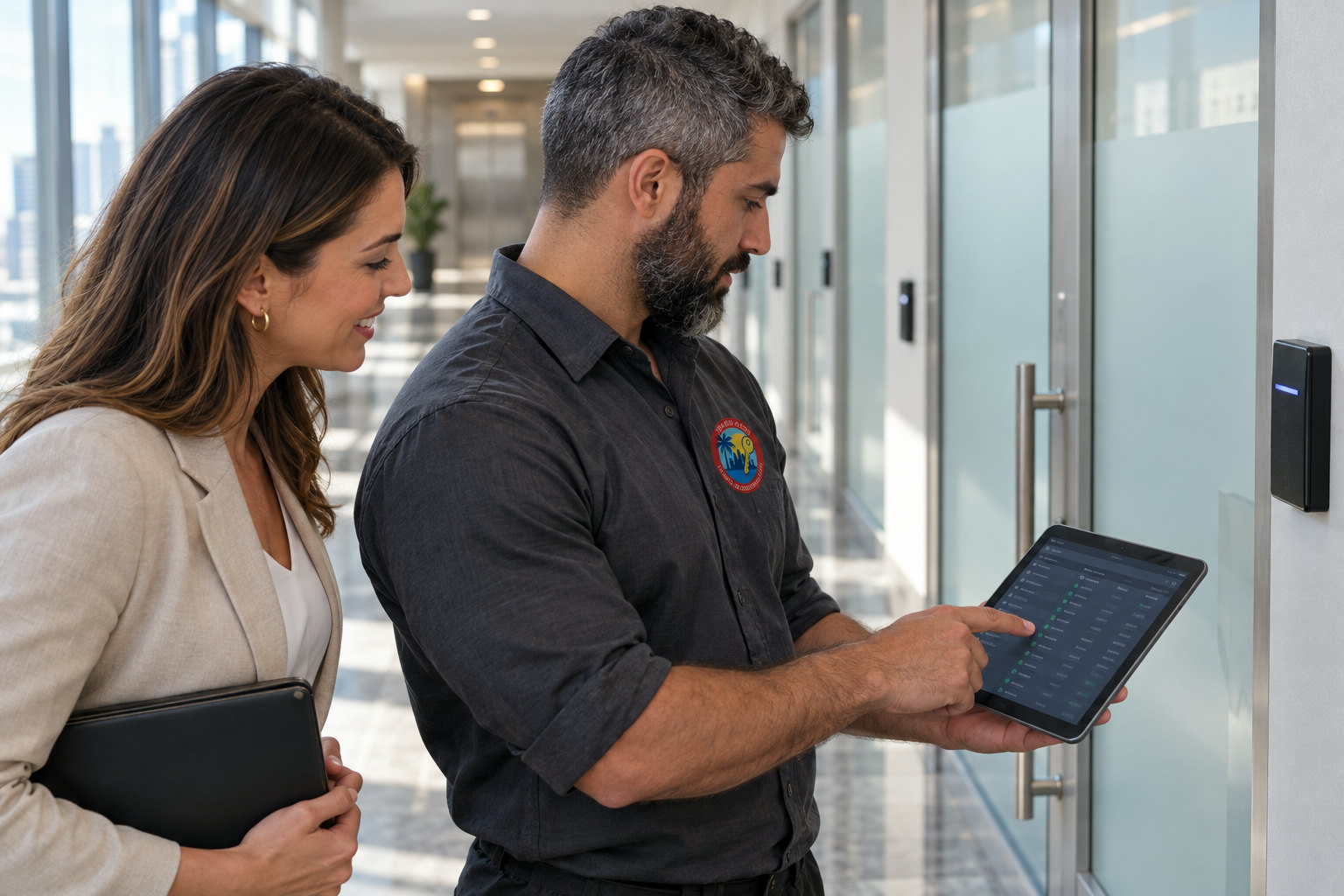
A cloud-managed reader or Wi-Fi keypad logs which code opened the door and when. That single feature settles the argument about whether the display crew really left at 6 p.m. or at 11:40. Shared codes destroy the log’s value – if six people use slot 1, the log tells you nothing.
Scale matters here. When a Brickell commercial office came to us for a master key retrofit across 12 doors and 3 suites, we completed it in 2 days using ASSA Abloy cylinders, with no downtime, and trained staff on access protocols – total cost $1,850. The cylinders were the easy part. The staff training on who gets which key and who revokes it is what made the system hold up afterward. Same principle applies to a single boutique with one keypad.
When the Answer Is Different
Giving contractors temporary access in Bal Harbour, Miami without changing your main lock code assumes a few things about your hardware and your lease. Here’s where the standard advice breaks down.
You have a single-combination mechanical pushbutton lock
Mechanical pushbutton locks are excellent on salt-air-exposed doors near the ocean – no batteries, no electronics corroding in humidity. But most hold exactly one combination. There is no temporary code. Your options are a mechanical override key issued to the vendor, escorting the crew, or upgrading to an electronic keypad at $250 – $400 installed.
The main entrance isn’t yours to change
In multi-tenant Bal Harbour and Bay Harbor Islands buildings, the lobby door, service corridor, and freight elevator are usually landlord-controlled. Your temporary code only governs your own suite. Coordinate with building management first – and note the vendor still needs their own building credential, which the property manager issues, not you.
Your stockroom has no Wi-Fi signal
App-managed smart locks depend on connectivity. Concrete walls, hurricane shutters, and interior mechanical rooms kill signal. In those spots we specify standalone multi-code keypads or a wired reader instead – you lose remote code issuance but keep offline reliability. Check the signal before you buy the app-dependent lock.
Staff turned over, not vendors
This one flips the whole article. When an employee leaves – or a tenant moves out – you don’t add a temporary code, you rekey and purge. Skipping that step after turnover is one of the most common gaps we’re called in to close, and it carries real liability exposure. It’s also the cheapest security work you’ll ever buy relative to what it prevents.
Someone already forced the door
If a crew has already pried a jamb, bent a strike, or over-torqued a lever trying to get in, call before you attempt anything else. Once structural repair joins the lock work, costs climb 30-50% – and a bent frame on a commercial door usually means alignment and jamb repair before any new hardware will seat correctly.
FAQ
How many temporary codes can a commercial keypad in Bal Harbour actually hold?
Commercial and residential-grade keypads hold anywhere from 19 to 250 user codes depending on the model – a Schlage BE365 holds up to 19, Schlage’s Encode line up to 100, and Yale’s Assure Lock 2 family up to 250. Pull your model number off the interior escutcheon and check the manufacturer’s specification before assuming you need new hardware. Most Bal Harbour boutiques we visit are using one code on a lock rated for dozens.
What does it cost to install an access control keypad for contractor access in Miami-Dade?
Commercial access control keypad installation runs $250 – $400 installed in Miami-Dade, and app-managed smart lock installation (August/Level-class) runs $280 – $380. Add $80 – $150 if the existing deadbolt prep needs modification – a common cost on older commercial doors and aluminum storefront stiles. A supporting Schlage or Yale deadbolt, if the door needs one, is $150 – $220.
Should I rekey or just delete the code after a contractor finishes?
Delete the code if the contractor only ever had a keypad credential – that’s instant and free. Rekey if they held a physical key, because brass can be duplicated at any Miami-Dade hardware counter and returning the original proves nothing. For interior doors, a master key system runs $120 – $180 per door and lets you re-pin selectively instead of replacing hardware.
Do I need to check Bal Harbour permits before letting a contractor into my store?
Yes – verify the permit and the contractor’s license through the Village of Bal Harbour Building Department before you issue any credential. Some minor cosmetic work falls under categories that don’t require a permit, but you still want the license verified and the access window aligned with the Village’s construction-hours provisions. A code that expires outside permitted work hours enforces the rule automatically.
Sources
- Permit requirements, contractor licensing verification, and village code provisions for Bal Harbour tenant work – Village of Bal Harbour, Florida (official site)
- Smart lock and keypad user-code capacity specifications (BE365, Encode) – Schlage
- Assure Lock 2 entry-code capacity and app-managed guest access – Yale Home
- Contractor registration and building department requirements for neighboring Miami Beach properties – City of Miami Beach
- Installed pricing, brand availability, and service coverage across Miami-Dade – I Need Locksmith Miami – commercial locksmith services
Have a similar question about vendor access at your Bal Harbour, Surfside, or Bay Harbor Islands location? Tell us the lock model on your back door and how many vendors rotate through in a month. We’ll tell you on the phone whether you need a $250 – $400 keypad or just a programming visit and a written code map – same-day mobile service across Miami-Dade, 24/7. Call (786) 813-0495 or request service online.
I Need Locksmith Miami
I Need Locksmith Miami is a Miami-Dade locksmith and door specialist serving residential, commercial, and automotive customers.
Set Up Expiring Contractor Codes for Your Bal Harbour Store →