Last updated: October 30, 2026
Published October 30, 2026 · Updated October 30, 2026
The rule a commercial locksmith in Miami applies to Allapattah tenant turnover and the interchangeable core control key is simple: the building owner holds the control key, never the tenant. On a Schlage ND lever with interchangeable cores, that one key can pull any core keyed to the system in seconds, so it stays with the owner (or one named backup), and the departing suite gets fresh cores the day possession comes back.
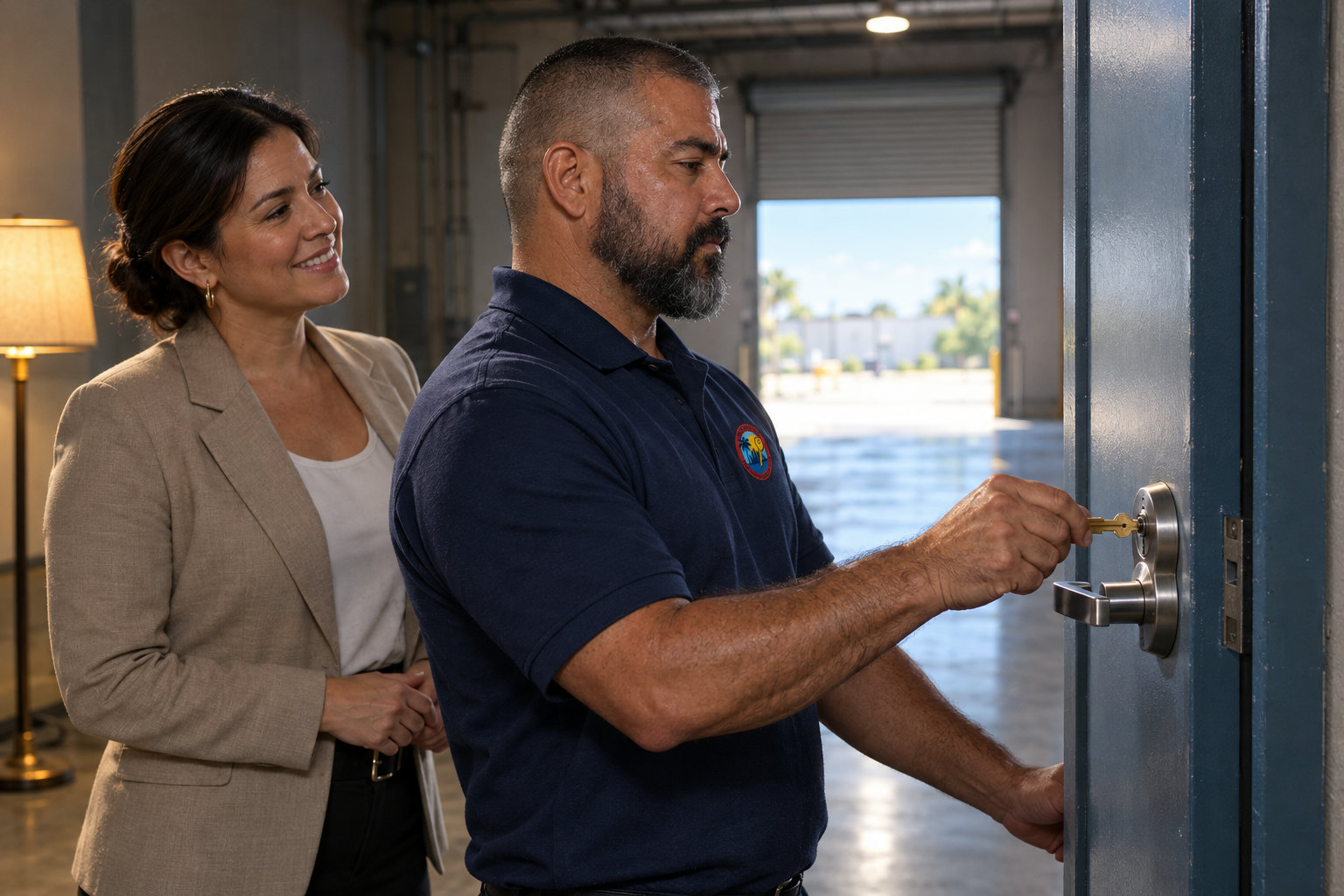
- The interchangeable core control key belongs with the building owner or one named backup. It should never be held by a departing tenant, a contractor, or a shared key box.
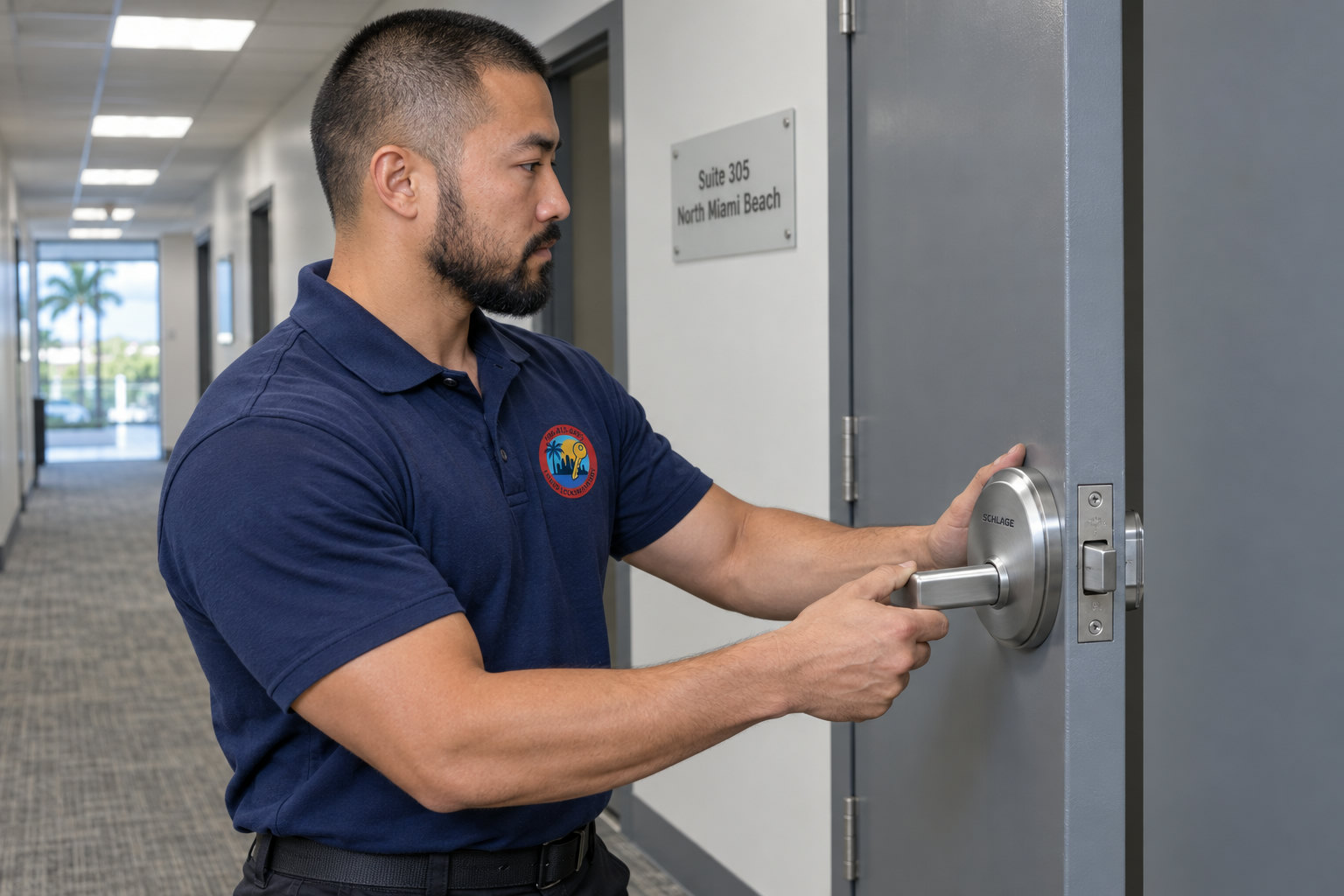
- The Schlage ND Series is an ANSI/BHMA Grade 1 cylindrical lever lock that can be ordered with a conventional cylinder, a full-size interchangeable core (FSIC) housing, or a small-format interchangeable core (SFIC) housing.
- With the control key, an interchangeable core slides out of the lever in seconds with no disassembly. A lost control key therefore compromises every IC door on the system, not just one suite.
- At tenant move-out, the fastest secure step is swapping the suite’s cores for pre-pinned replacements, then rekeying the removed cores at the bench for the next tenant.
- A restricted keyway such as Schlage Everest 29 limits who can order duplicate keys, but it cannot recall a control key that has already left the owner’s hands.
- Florida’s rules for commercial leases sit in Part I of Chapter 83 of the Florida Statutes, and the lease itself usually decides who owns tenant-installed lock hardware.
The Short Answer: Who Holds the Interchangeable Core Control Key at Tenant Turnover?
The interchangeable core control key at tenant turnover belongs to the building owner. It should be held by the owner or by exactly one named backup, usually the property manager or the commercial locksmith who maintains the key system. The departing tenant should never have held it. If they did, the cores on their suite, and possibly every core in the building, are no longer fully under your control.
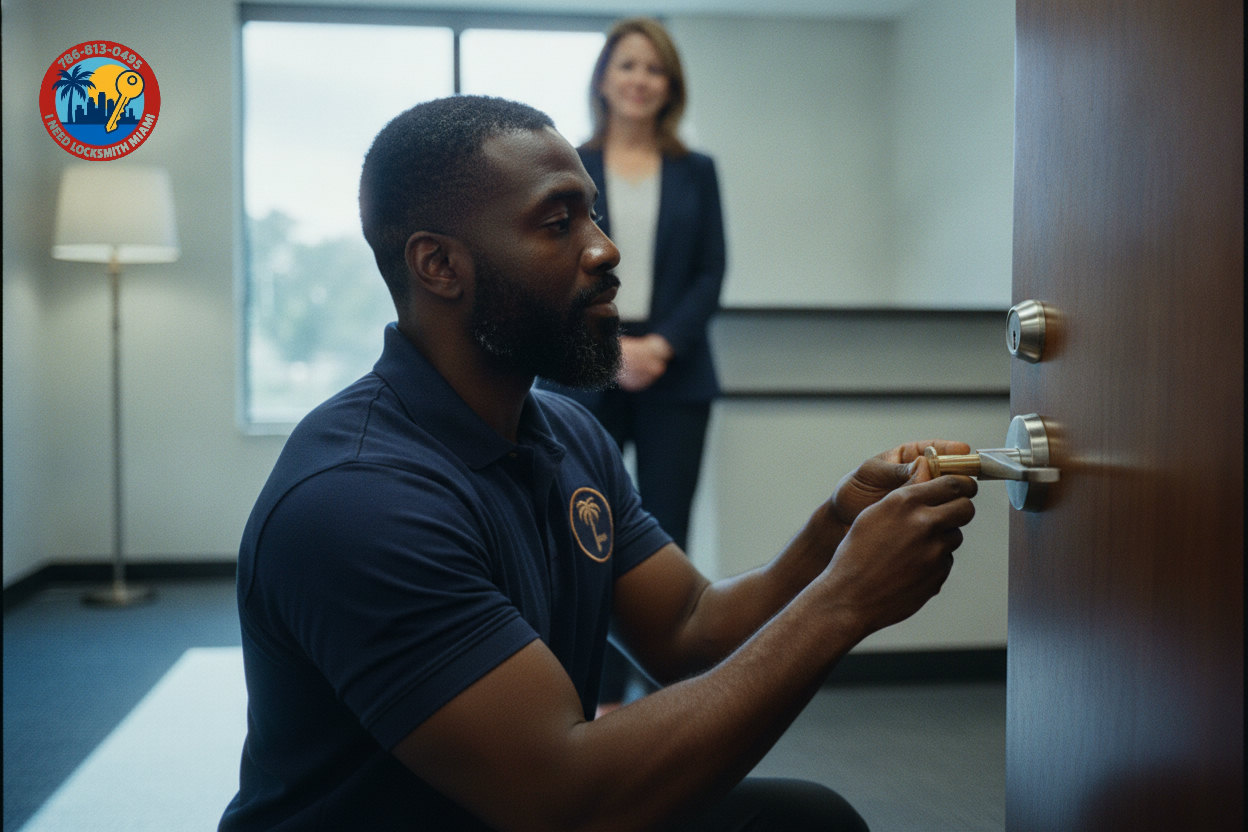
Here is who this is for. You’re the property manager juggling a multi-tenant warehouse, flex building, or retail strip fitted with Schlage ND levers, and a tenant just handed back a ring of keys. Your order of operations is: confirm possession, pull the suite’s cores with the control key, install fresh cores, test them, and log the change. That sequence is the core of how a commercial locksmith in Miami handles tenant turnover and interchangeable core control key custody. It is a short job when the paperwork is in order.
The Full Answer: How Does a Commercial Locksmith in Miami Manage Control Keys at Move-Out?
A commercial locksmith in Miami manages control keys at move-out by treating the control key as the most sensitive key in the building, above the grand master. The details depend on which core format your Schlage ND levers use, who paid for the hardware, and whether that key has ever left the owner’s custody. Each nuance is covered below.
What does the control key actually do on a Schlage ND lever?
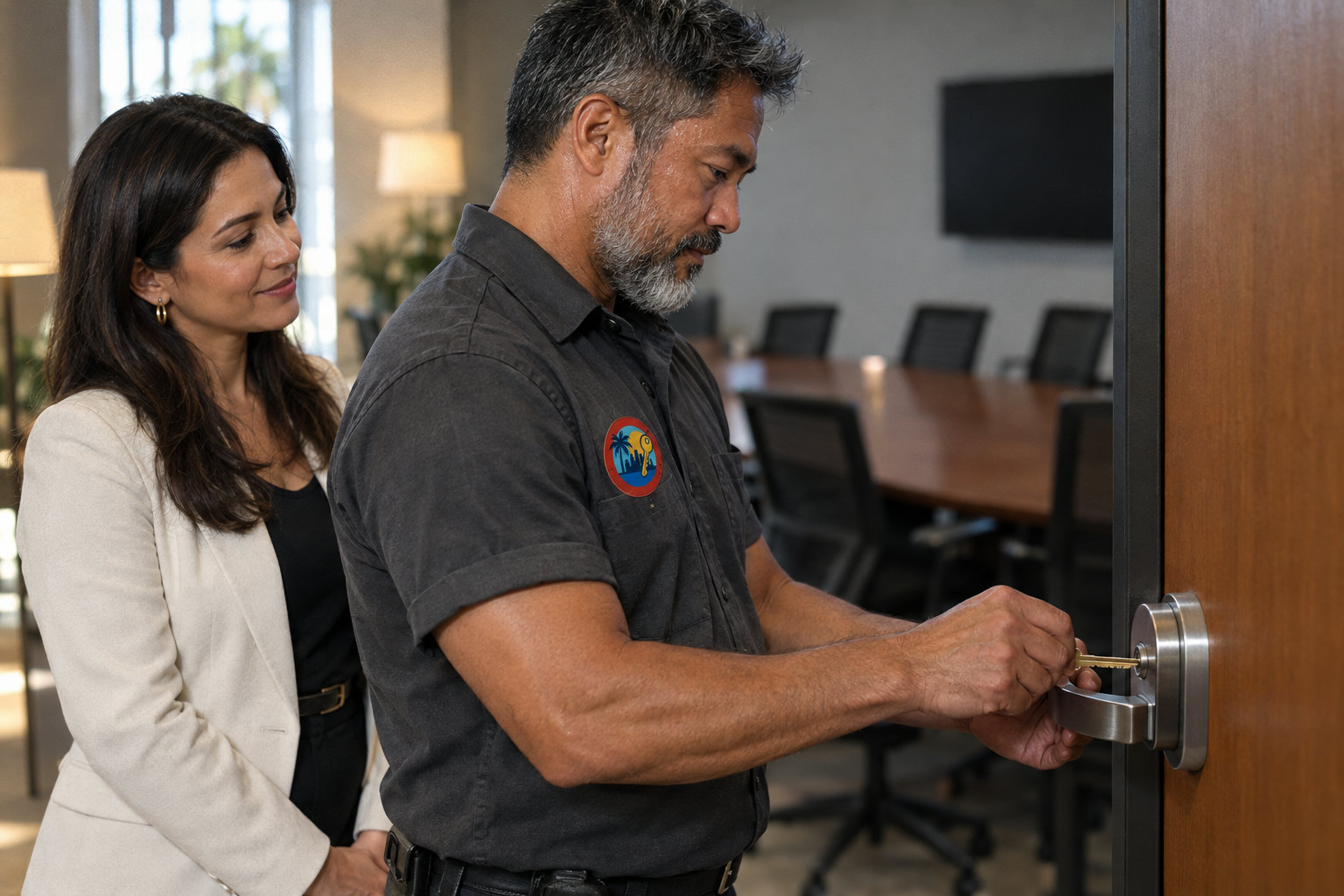
The control key on a Schlage ND lever removes the interchangeable core from its housing without taking the lever apart. An interchangeable core is a self-contained pin-tumbler module. The everyday operating key turns the plug at one shear line, and the control key reaches a second shear line that turns a sleeve and retracts the retaining lug, so the whole core slides out.
Schlage ND Series levers can be ordered with a full-size interchangeable core (FSIC) housing, which takes Schlage’s own full-size cores, or a small-format interchangeable core (SFIC) housing. SFIC is the figure-eight shaped core format made by several manufacturers, including Medeco. Both formats behave the same way at turnover: one control key, one quick removal, and a new core goes in.
The part most people miss is this. With the core out, the lock mechanism behind it is exposed and can usually be operated with a tool. Holding the control key effectively means holding entry to every IC door, plus the ability to install a core nobody else can open.
| Key in an IC system | What it can do | Who should hold it |
|---|---|---|
| Control key | Removes and installs any core keyed to the system’s control combination | Building owner, plus at most one named backup |
| Grand master key | Operates every core in the building | Owner and senior property management only |
| Master key | Operates one group of doors, such as one floor or one wing | Maintenance staff, signed out and logged |
| Change (operating) key | Operates one suite’s cores only | The current tenant, returned at move-out |
| Construction control key | Removes temporary construction cores during a buildout | General contractor, voided when permanent cores go in |
Why shouldn’t the tenant hold the control key, even if they paid for the cores?
A tenant who paid for interchangeable cores still should not hold the control key, because that key is cut to the building’s control combination, not to the tenant’s suite. In most IC systems, one control combination runs across every core in the building. A control key that opens one suite’s cores will usually remove the neighbor’s cores too.
The risk runs in two directions. A tenant holding the control key can swap in a core of their own and lock the owner out of the space, which cuts off emergency and maintenance entry. They can also pull a core on a door they were never meant to open. Neither outcome needs bad intent; a control key left on a tenant’s ring and later lost does the same damage.
Commercial leases commonly require landlord consent before a tenant alters locks. Florida’s nonresidential tenancy rules, found in Part I of Chapter 83 of the Florida Statutes, leave much of this to the lease itself. Read the lock and alterations clause before move-out day, not during it.
Who holds it day to day: the owner, the manager, or the locksmith?
Day-to-day control key custody works best with one original and, at most, one working copy, each assigned to a named person. A common arrangement looks like this:
- The owner keeps the original control key in a safe or locked key cabinet, off-site from the building if possible.
- The property manager holds one working copy, signed for in a key register, for core swaps between tenants.
- The commercial locksmith holds the key system records (the bitting chart and control combination) and can cut a replacement on the owner’s written authorization.
Some owners prefer that no one on site holds a control key at all, with the locksmith performing every core change. That costs some convenience and buys a lot of certainty. Whatever you choose, keep the control key off the master ring, out of lockboxes, and stamped with a code rather than the word “control.”
What happens at move-out, step by step?
A Schlage ND interchangeable core swap at move-out follows the same sequence whether the suite has one door or six. Here it is in order:
Confirm possession is back
The lease has ended, the tenant has surrendered the space in writing, or a court process has concluded. Changing cores before that point is a legal question, not a locksmith one.
Count returned keys against the register
Note every change key issued and every one returned. A missing key does not stop the swap, but it should be on record.
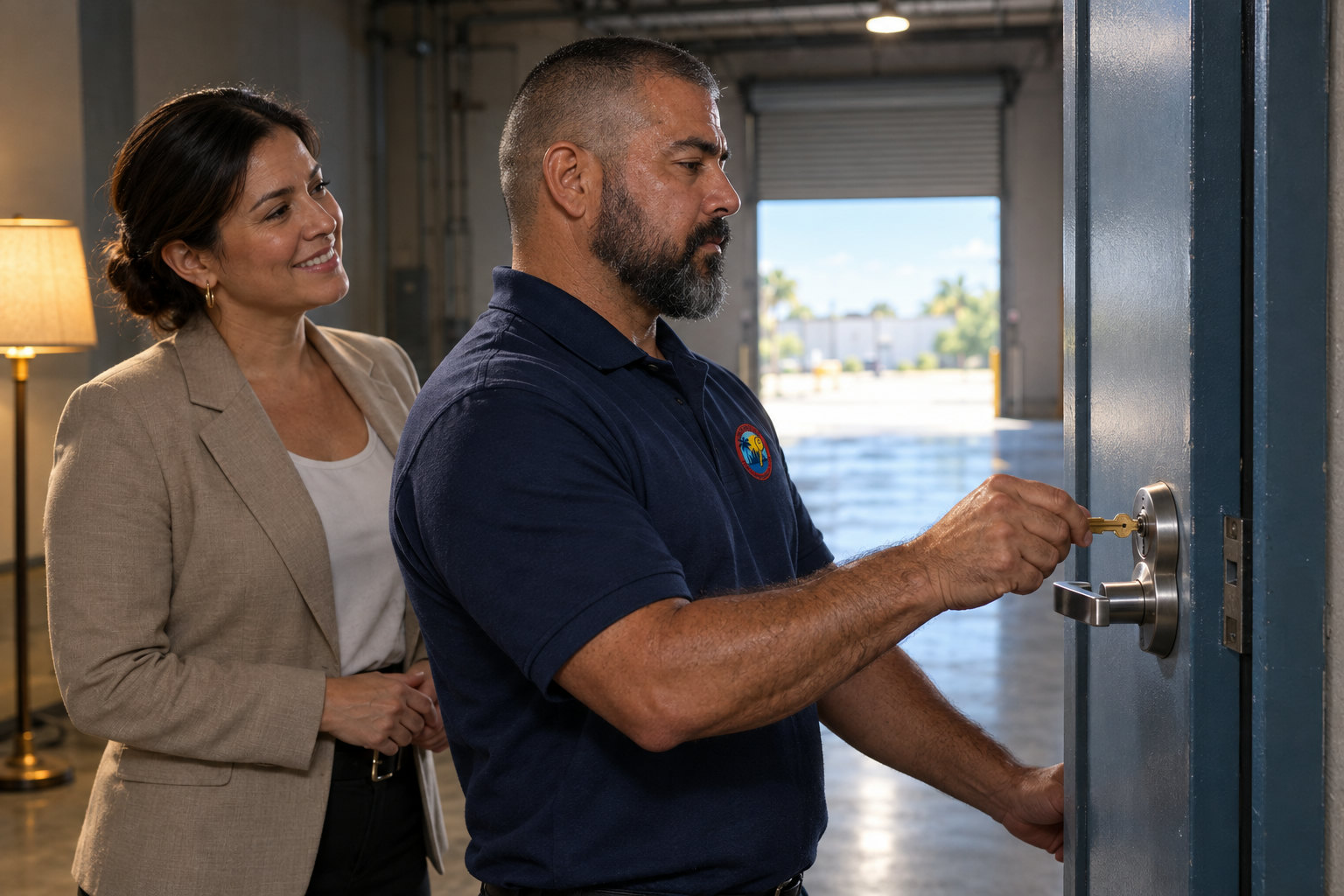
Pull the suite’s cores with the control key
Every lever, exit device rim cylinder, and mortise cylinder the tenant had a key to comes out, including storage rooms and rear service doors.
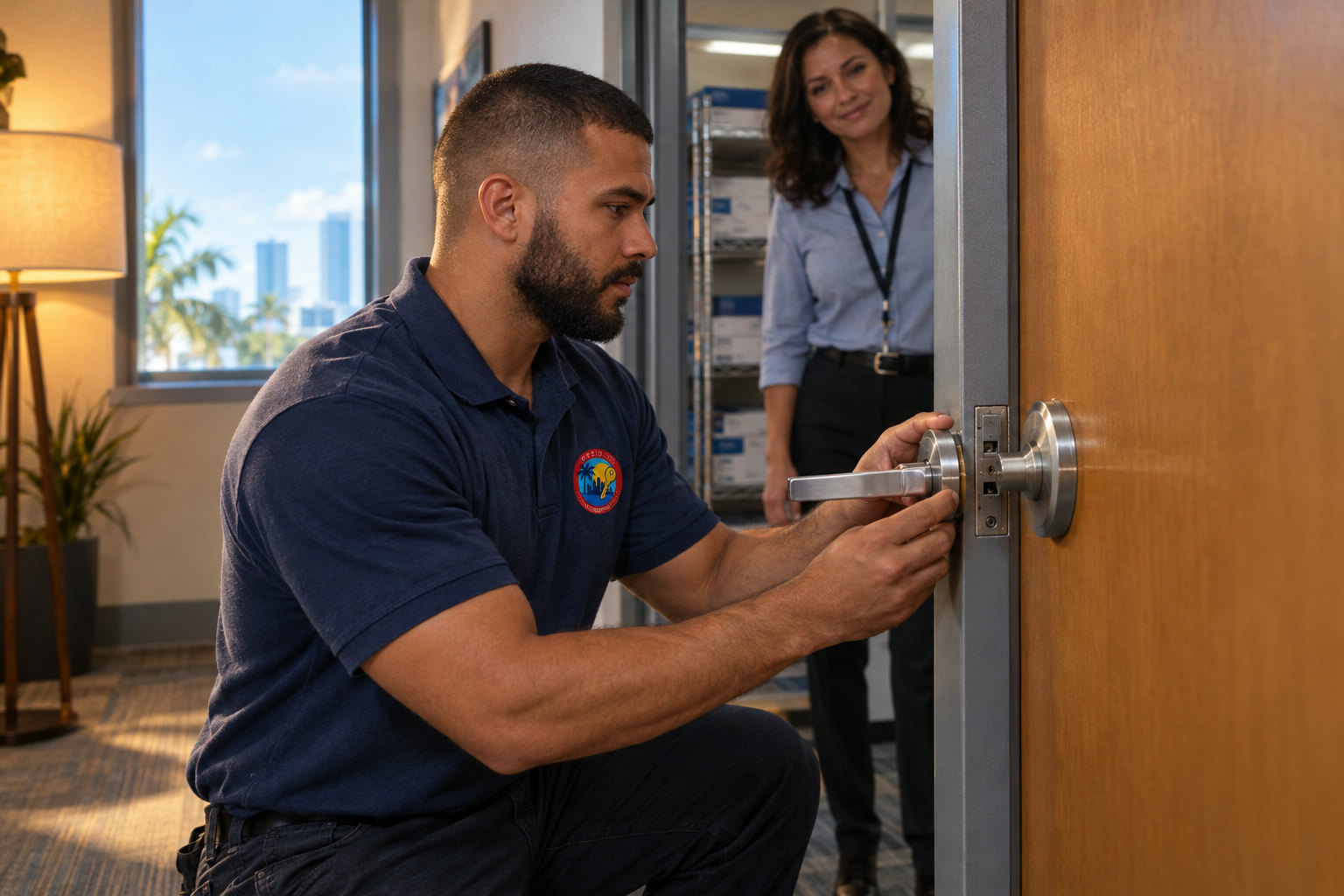
Install pre-pinned replacement cores
The new cores are keyed to a fresh change key but stay inside the existing master and grand master hierarchy, so building staff keys keep working.
Test every key level on every door
Change key, master, grand master, and control key each get tried, and the old change key is tried to confirm it no longer works.
Rekey the removed cores and update the register
The old cores are repinned at the bench to a new combination and become the spares for the next turnover.
A common mistake is skipping this step entirely after a tenant leaves or an employee turns over. Old change keys stay in circulation, which creates a real security gap and liability exposure if something later goes missing from the suite.
A Schlage ND interchangeable core swap at move-out means confirming possession, pulling every core the tenant had a key to, installing pre-pinned cores within the existing master system, and testing every key level. The removed cores get rekeyed and become next turnover’s spares.
What if the control key is already missing, or the ex-tenant has a copy?
A missing or compromised control key cannot be fixed by changing one suite’s cores. Every core in the building shares the control combination, so the only real repair is re-coring the system to a new control combination. That usually means repinning or replacing every IC core, often alongside a new master level.
The work can be phased. Exterior doors and high-value spaces go first, then interior suites in order of risk. A restricted keyway such as Schlage Everest 29, or a high-security platform from Medeco or Mul-T-Lock, makes it far harder for anyone to get unauthorized copies of the new keys. It does nothing about a copy of the old control key already out in the world, which is why the re-core comes first.
If a core refuses to come out, do not pry it or drill it. Another common mistake is calling a locksmith only after the lever housing, door, or frame has already been damaged, which turns a quick core change into hardware and frame repair on top of the lock work.
How do warehouse and mixed-use buildings in Allapattah change the plan?
Warehouse, light-industrial, and mixed-use commercial buildings change the move-out plan because a single suite often uses several lock types at once. The neighborhood’s building stock includes wholesale and distribution space, converted industrial buildings housing galleries and studios, and small retail frontage. A tenant’s key ring in that kind of building can open far more than a lever.
A typical suite might have Schlage ND IC levers on interior office doors, a rim cylinder on a panic bar at the rear service door, and a mortise cylinder on the front storefront door. Your turnover checklist has to cover every cylinder the tenant could open, including padlocked gates and roll-up door locks. If the storefront runs on mortise cylinders, it helps to know how the main mortise platforms compare, which is covered in our breakdown of Schlage, Yale and Mul-T-Lock mortise cylinders for master key systems.
Lever function matters too. A suite storage room fitted with a storeroom-function lever behaves very differently from a classroom-function lever when the next tenant moves in, and the difference is explained in our guide to storeroom vs classroom lever locks for commercial doors.
When the Answer Is Different
The owner-holds-the-control-key rule for interchangeable cores has a few legitimate exceptions. Each one depends on what the lease says and who is operating the building.
The tenant installed its own IC system under the lease
A tenant that installed its own interchangeable core system, with its own control combination, may legitimately hold that control key during the lease term. The building owner should still have emergency entry, either through a key kept in a sealed envelope or a core keyed to the building’s master. At move-out, the lease decides whether the tenant removes its cores or leaves them; either way, the suite returns to the building standard before the next tenant arrives.
A single tenant runs the whole building
A single-tenant building on a net lease, where the tenant handles operations and maintenance, often puts the control key with the tenant’s facilities manager for the term. The handoff at lease end then becomes a full transfer. The control key comes back, and the owner should re-core the building to a new control combination before re-leasing it.
The suite is mid-buildout on construction cores
Construction cores are temporary interchangeable cores used while contractors work. The general contractor holds the construction control key until permanent cores go in. Once they do, confirm the construction cores are gone from every opening and that the construction control key will not remove the permanent cores.
The tenant has not actually surrendered the space
A tenant in default who has not surrendered the space is a legal matter first. Florida’s nonresidential tenancy statutes in Part I of Chapter 83 govern how a landlord recovers possession, and the lease adds its own terms. Talk to your attorney before any core change on an occupied suite; the locksmith work is quick once you have legal footing.
The door also has electronic access control
Doors with card readers, maglocks, or electric strikes still usually carry a mechanical override cylinder, and that cylinder is often an interchangeable core. Deleting the tenant’s credentials in the software is only half of the turnover; the override core needs the same swap. If the building is weighing hardware for multi-tenant doors, our comparison of maglocks vs electric strikes for multi-tenant offices covers the trade-offs.
Our view
Our opinion, stated plainly: building owners tend to overweight the brand and grade of the cylinder and underweight custody of the keys. A Schlage ND Grade 1 lever with a high-security core is excellent hardware. It offers little protection if the interchangeable core control key lives on a hook in the maintenance closet.
What actually matters is a short list: one original control key, at most one working copy, a signed key register, and a few spare pre-pinned cores on the shelf so every move-out can be handled the same day. A building with those four things will handle a tenant turnover cleanly on almost any IC platform. A building without them will struggle on the best hardware made.
If you are choosing where to spend first, spend on records and spares, then on a restricted keyway like Schlage Everest 29, and only then on premium cores.
Frequently Asked Questions
Can a property manager change a Schlage interchangeable core without a locksmith?
A property manager can change a Schlage interchangeable core without a locksmith if they hold the control key and have a replacement core already pinned to the building’s key system. The physical swap takes seconds and needs no tools. Pinning new cores to the system’s bitting is locksmith work, because it requires the key system records and a pinning kit.
Is FSIC or SFIC better for a multi-tenant commercial building?
FSIC versus SFIC for a multi-tenant building mostly comes down to what is already installed. Schlage FSIC takes Schlage’s own full-size cores and keyways, including restricted Everest 29, while SFIC is a shared figure-eight format with cores available from several manufacturers, including Medeco. Mixing both formats in one building doubles the spare cores you have to stock, so pick one and standardize.
How often should control key custody be audited?
Control key custody is worth auditing at every tenant turnover and at least once a year. An audit means physically seeing the original and the working copy, checking the key register signatures, and confirming the control key still removes a test core. Any change of property management company should trigger an immediate audit.
Does a restricted keyway like Schlage Everest 29 stop an ex-tenant from copying keys?
A restricted keyway like Schlage Everest 29 stops an ex-tenant from walking into a hardware store and copying keys, because blanks are distributed through authorized dealers and duplicates require authorization from the key system’s owner. It cannot recall copies already made. That is why the move-out core swap still has to happen even on a restricted system.
Sources
- Schlage ND Series lever options, interchangeable core formats and the Everest 29 restricted keyway: Schlage (Allegion) official site
- ANSI/BHMA grading standards for commercial locks, including Grade 1 cylindrical locks: Builders Hardware Manufacturers Association (BHMA)
- Florida rules for nonresidential tenancies, Part I of Chapter 83: The Florida Senate, Florida Statutes Chapter 83
- Service lines, brand partners and 24/7 mobile commercial service across Miami-Dade: I Need Locksmith Miami
I Need Locksmith Miami
I Need Locksmith Miami is a Miami-Dade locksmith and door specialist serving residential, commercial, and automotive customers.
 Listen to this articleAudio version
- A Coral Gables Office Manager Asked a Commercial Locksmith in Miami: “When a Tenant Moves Out, Should We Rekey or Replace the Office Locks?”
- A Brickell Office Manager Asked a Locksmith in Miami: “Who Should Be Able to View Card Reader Entry Logs in a Multi Tenant Office?”
- A Miami Edgewater Office Manager Asked a Commercial Locksmith: “Why Does Our Shared Supply Room Stay Unlocked After Someone Uses a Key?”
- A Hialeah Office Manager Asked: “Will Our Multi Tenant Door Unlock During a Power Outage?” What Maglock and Electric Strike Wiring Means for Access Control
- A Medley Office Manager Asked a Commercial Locksmith in Miami: “What Type of Lock Is Best for a Multi-Tenant Office When Tenants Keep Copying Shared Keys?”

One Response